
Esports program for NDIS participants in Adelaide Play. Learn. Level up.
A structured, 12-week esports program built for NDIS participants, with support workers playing as teammates.
Now accepting referrals. Cohort 1 is planned to start on 1 December 2026.

Gaming is not the problem. Where they game is.
At 30 June 2026, 782,013 people were NDIS participants, and 350,651 of them (about 45%) had autism as their primary disability, the largest single disability group in the scheme (NDIA, participant data at 30 June 2026). Gaming is a big part of life for many young people with disability: in eSafety's 2025 research with children and teens aged 8 to 17, 9 in 10 young people with disability had played online games in the past year. Online spaces can be great, but they are often unsupervised and can be unsafe. LOADED brings structure, safeguarding and support into the place they already want to be.
Source: eSafety Commissioner, "It’s more than fun and games", July 2025
CH3CKPOINT was built to offer a safer alternative. We don't ask participants to leave gaming behind to access support. We bring the structure, the safeguarding and the community into the place they already call home.
Every LOADED session has one support worker for every two participants, playing as teammates, not watching from the side.
LOADED: every week has a job to do.
The LOADED curriculum brings gaming out of unsupervised online spaces and into a supported hub, with 12 weeks of structured skill-building, progress checked at the start, middle and end, and a reason to show up every week.
LOADED isn't a gaming club. It's a structured skill-building curriculum, informed by research on social skills and emotion regulation, that uses gaming as its medium, because that's where these young people already are. We don't ask participants to change their interests to access support. We bring the support to them. Every session is linked to goals in social skills, emotional regulation, digital literacy and communication. Every participant who completes the program gets an exit report summarising their progress, which they can choose to share at their plan review.
Twelve weeks in four phases: Cyber Security, Systems Thinking, Social Skills, and Compete & Pitch. Clear NDIS outcome goals are built into every session from the start, not bolted on.
Phase 1
Cyber Security
E-safety and cyber security in the gaming spaces participants already use, such as Discord, Steam, Roblox and Fortnite. We teach about these spaces; participants do not need an account on them, and we never sign anyone up to a platform below its minimum age.
Phase 2
Systems Thinking
A factory building game builds planning, automation and problem-solving in a world that rewards thinking ahead.
Phase 3
Social Skills
Puzzles and treasure hunts in a block building world that depend on verbal communication, teamwork and working through problems together.
Phase 4
Compete & Pitch
Squads compete in a tournament and Grand Final, practise losing with grace, and practise pitching their ideas and teams to sponsors.
At the end of 12 weeks: a Grand Final session with families invited, a graduation, and an exit report summarising how you went. After that, you can join a later cohort or our social sessions.
It's not therapy. It's not just gaming. It's skill-building through play.
Sessions feel like gaming with friends. Support workers play on your team. You build skills while you play. We keep notes on your progress, and you can ask to see them at any time.
- 8 gaming stations
- High-spec PCs and your own station, every session. Tell us what controller or set-up works for you and we'll do our best to match it.
- Small group
- Max 6 participants, 3 support workers (1:2 ratio). Nobody gets lost in the crowd.
- No experience needed
- Beginners welcome. The program builds from scratch, and all skill levels play together.
- 3 hours per week
- Consistent weekly session, same time, same place, and the same team wherever we can. Routine matters.
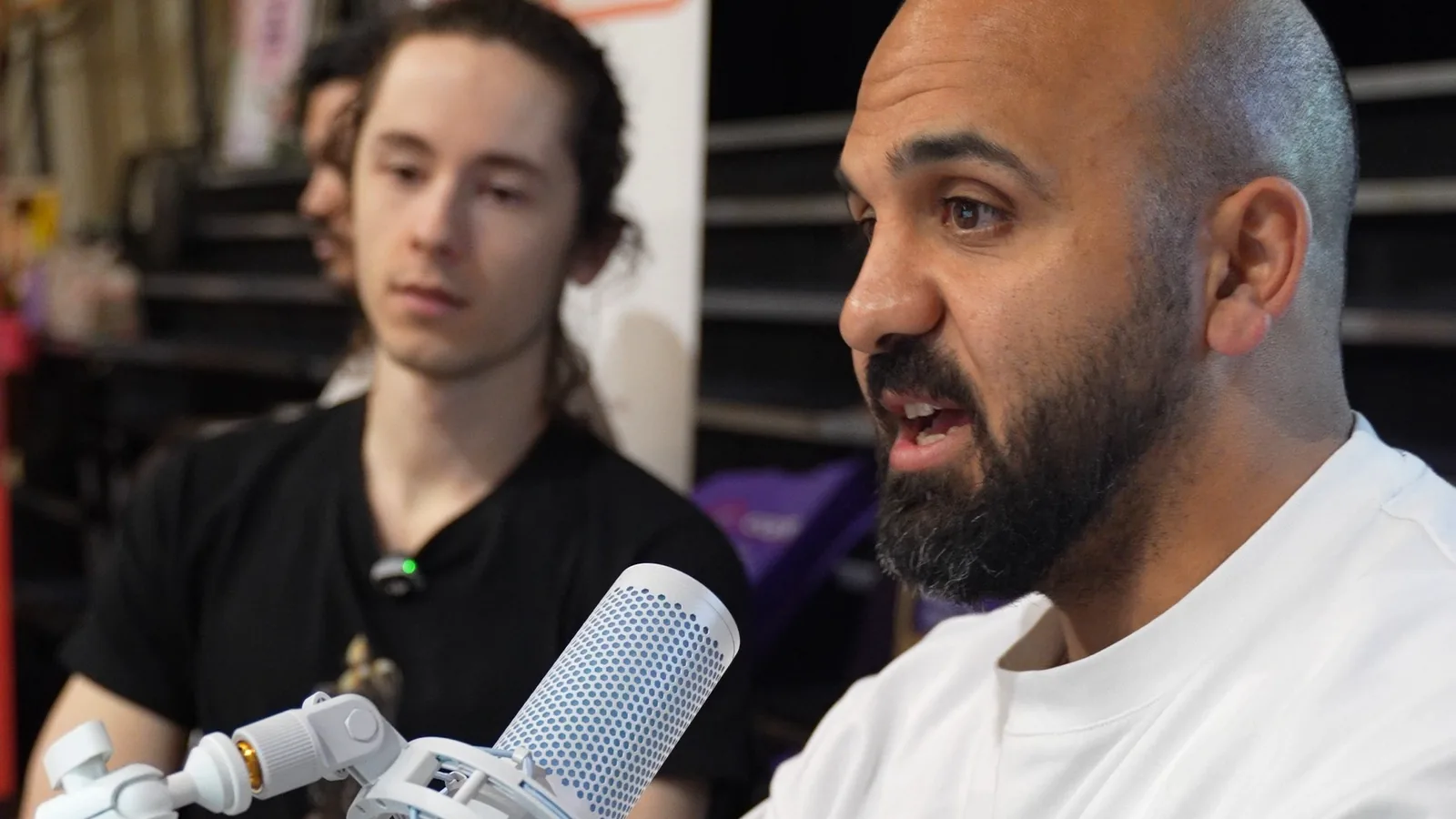
Eight stations. One community.
Our Wright Street hub in Adelaide is being fitted out now: high-spec gaming stations, set-ups adjusted to suit you, and a support worker by your side every session.
Our hub at Shop 3, 36-42 Wright Street is being fitted out. Cohort 1 is planned to start on 1 December 2026, with a two-week break over Christmas and New Year, and to finish on 9 March 2027. Currently accepting self-managed & plan-managed participants. Not yet NDIS-registered; we're preparing to register.
Questions families ask
Do I need to be good at gaming?
Not at all. The program starts from the beginning and is designed for people who have never played a game before. The skill-building is the point, not a prerequisite.
Is it competitive? What if I don't like losing?
Yes, there's a competitive element, and learning to lose with grace is part of the Compete & Pitch phase. Managing emotions around competition is one of the core skills we practise together.
What does NDIS fund?
Funded from the participant's NDIS plan, mainly Core Supports (social and community participation). Where a participant's goals genuinely match, some supports can be claimed under a Capacity Building item. We confirm the right item at intake, and we only use a Capacity Building item where the support genuinely matches it. No gap fees: you pay nothing on top of your NDIS funding. Whether your plan can cover the program depends on your plan's budget, and NDIS budgets for community participation are changing from 1 October 2026. We will check this with you, and with your support coordinator or plan manager, before you start.
What if we miss a session?
Once you enrol in LOADED, each session is claimed from your NDIS plan whether or not you attend (session time only, never the progress report, centre cost or travel). If you stop coming without telling us, we claim for no more than 4 weeks in a row. You can leave at any time: tell us, and we stop claiming no later than 2 weeks after you tell us. Social sessions are free to cancel up to 72 hours before.
What happens at the end of 12 weeks?
A Grand Final session with families invited, a graduation, and an exit report summarising how you went. After that, you can join a later cohort or our social sessions. ADEL, a national esports league, is planned for the future.
Measured progress. Not guesswork.
We check each participant's progress at intake and exit, with a mid-program review based on session observations, so progress is tracked rather than assumed, and the exit report can be shared at plan review if the participant chooses. We're in discussions with Flinders University about a research partnership. Nothing is confirmed yet. If a research partnership is established, research participation would be voluntary, with separate consent, and separate from service delivery. Research on structured, group-based social skills programs for autistic young people is encouraging, and studies of digital and game-based approaches are growing, but LOADED itself has not yet been independently evaluated.
Intake
A baseline check before the program starts.
Mid-program
A review based on session observations.
Exit
An exit report, shared at plan review if the participant chooses.
We measure six areas: wellbeing, social connection, emotion regulation, social skills, progress on NDIS goals and digital literacy, using published questionnaires where they suit the participant's age, plus our own session records and a digital literacy check we built ourselves. We only use a published scale where it suits the person and we hold any licence it needs. If the partnership goes ahead, participants who consent could also receive independent research measurement. Research participation would be voluntary, with separate consent, and separate from your service agreement.
- Wellbeing
- Social connection
- Emotion regulation
- Social skills
- NDIS goal progress
- Digital literacy
Research is opt-in
If a research partnership goes ahead, research would need your separate consent. Saying no to research has no effect on your service.
Who we support.
CH3CKPOINT currently accepts self-managed and plan-managed NDIS participants. We work with your SC or LAC to confirm the right support items at intake.
Participant eligibility
The LOADED program is best suited for young people who:
- Are NDIS participants aged 12 and over (designed mainly for 12 to 25)
- Have an interest in gaming (zero experience required)
- Have autism, ADHD, intellectual or psychosocial disability
- Can participate in a small group setting (with support)
- Are self-managed or plan-managed
- Don't currently need a regulated restrictive practice as part of their support (we can't provide this while we are not NDIS-registered)
Funding and billing
Funded from the participant's NDIS plan, mainly Core Supports (social and community participation). Where a participant's goals genuinely match, some supports can be claimed under a Capacity Building item. We confirm the right item at intake, and we only use a Capacity Building item where the support genuinely matches it.
Whether your plan can cover the program depends on your plan's budget, and NDIS budgets for community participation are changing from 1 October 2026. We will check this with you, and with your support coordinator or plan manager, before you start.
- Staffing ratios: LOADED sessions run at 1:2 (up to 6 participants with 3 support workers) and social sessions at 1:3 (up to 6 participants with 2 support workers)
- A 30 minute individual progress report after every LOADED session, included in every LOADED enrolment and agreed at sign-up. How it is billed is set out in your service agreement.
- Once you enrol in LOADED, single sessions cannot be cancelled. Each session's face-to-face time is claimed from your NDIS plan whether or not you attend. You can leave LOADED at any time: tell us you are leaving, and we stop claiming no later than 2 weeks after you tell us.
- Social sessions: cancel at least 72 hours before the start and there is no charge. With less notice, or if you do not come, the session time may be claimed from your NDIS plan.
- For a missed session we only claim the session time. We never claim the progress report, the centre cost or travel, and you never pay us out of your own pocket.
- The hub is closed from 21 December 2026 to 3 January 2027. No sessions run and nothing is charged while we are closed. LOADED's 12 sessions run either side of the break.
- No gap fees: for NDIS-funded sessions you pay nothing on top of your NDIS funding
- Service agreement provided before commencement
- Social sessions three times a week to start (times to be confirmed), at a 1:3 ratio
- Every new participant can try one free social session. There is no cost to you or your plan, and you do not have to sign up to anything afterwards.
For support coordinators and Local Area Coordinators
Referral that takes less than 10 minutes.
CH3CKPOINT is built to fit cleanly into the SC workflow: minimal admin, regular progress reporting and clear billing. Staffing ratios: LOADED sessions run at 1:2, with up to 6 participants and 3 support workers, and social sessions run at 1:3, with up to 6 participants and 2 support workers. Funded from the participant's NDIS plan, mainly Core Supports (social and community participation). Where a participant's goals genuinely match, some supports can be claimed under a Capacity Building item. We confirm the right item at intake, and we only use a Capacity Building item where the support genuinely matches it.
Make a referral
Email us with the participant's first name, your contact details and the service they're interested in. Please check first that the participant (or their parent or guardian) is happy for you to contact us. Don't send their NDIS number, diagnosis or plan details yet. We'll collect those securely at intake. We reply within 2 business days. Because we are not yet NDIS-registered, we'll ask the participant or their plan manager to confirm that the plan is self-managed or plan-managed and that it has the right funding.
Intake & service agreement
We run a 30-minute intake call with participant and family. Baseline assessment completed. Service agreement provided and signed.
12 weeks + exit report
Weekly sessions, a short individual progress report after each session, and an exit report summarising progress against the participant's goals, which they can choose to share at plan review.
Reporting you'll receive (with the participant's consent)
- Session observation logs
- Baseline & exit reports
- Progress measures
- NDIS goal mapping
- A format suited to plan reviews
Missed sessions and leaving
LOADED is run as a Program of Support, following the NDIS pricing rules, and the terms are in the service agreement. Each scheduled session is claimed whether or not the participant attends (face-to-face time only). Participants can exit at no cost on no more than 2 weeks' notice.
After an unannounced stop we claim for no more than 4 consecutive weeks. We never claim ahead of delivery, and never the progress report, Centre Capital or travel for a missed session.
Social, 1:1 and other sessions: no charge with at least 72 hours' notice. Later cancellations and no-shows may be claimed under the short notice cancellation rule, and only when its conditions are met.
Forecast social return: about 3.5:1
This is our own forecast for a program that has not run yet, not a measured result, and it has not been independently checked. Ask us for the method and assumptions.
Ready to refer? Or just want to know more?
We're accepting referrals now for Cohort 1, which is planned to start on 1 December 2026. Contact us to check cohort availability, ask questions about billing, book a 15-minute info call for families, or register interest for a hub tour. Every new participant can try one free social session, at no cost to you or your plan, and you do not have to sign up to anything afterwards. Hub tours and free trial social sessions will start shortly before Cohort 1. We will contact you with dates.
Email hamid@ch3ckpoint.com.au or call 0435 759 867
Deaf, hard of hearing or speech impaired? Contact us through the National Relay Service (accesshub.gov.au) and give our number.
- Self-managed and plan-managed
- No gap fees
- We reply within 2 business days
When you email us, we collect your contact details and anything you tell us, so we can answer you. Our email runs on Microsoft 365, which may store it outside Australia, including in the United States. If you're writing about someone else, please check they (or their parent or guardian) agree, and don't include NDIS numbers or health details until we ask. Read our Privacy Policy. To give feedback or make a complaint, see Complaints and Feedback.